
The Coral Triangle Explained: Why Diving in North Sulawesi Is Unforgettable
If you are a diver, you have probably heard of the Coral Triangle, sometimes referred to as the “Amazon of the Seas”. It is a place that divers, snorkellers, and marine scientists all have on their bucket lists, but where is the Coral Triangle and what makes it so special? Let’s dive right in and explain all you need to know about The Coral Triangle.
What exactly is the Coral Triangle?
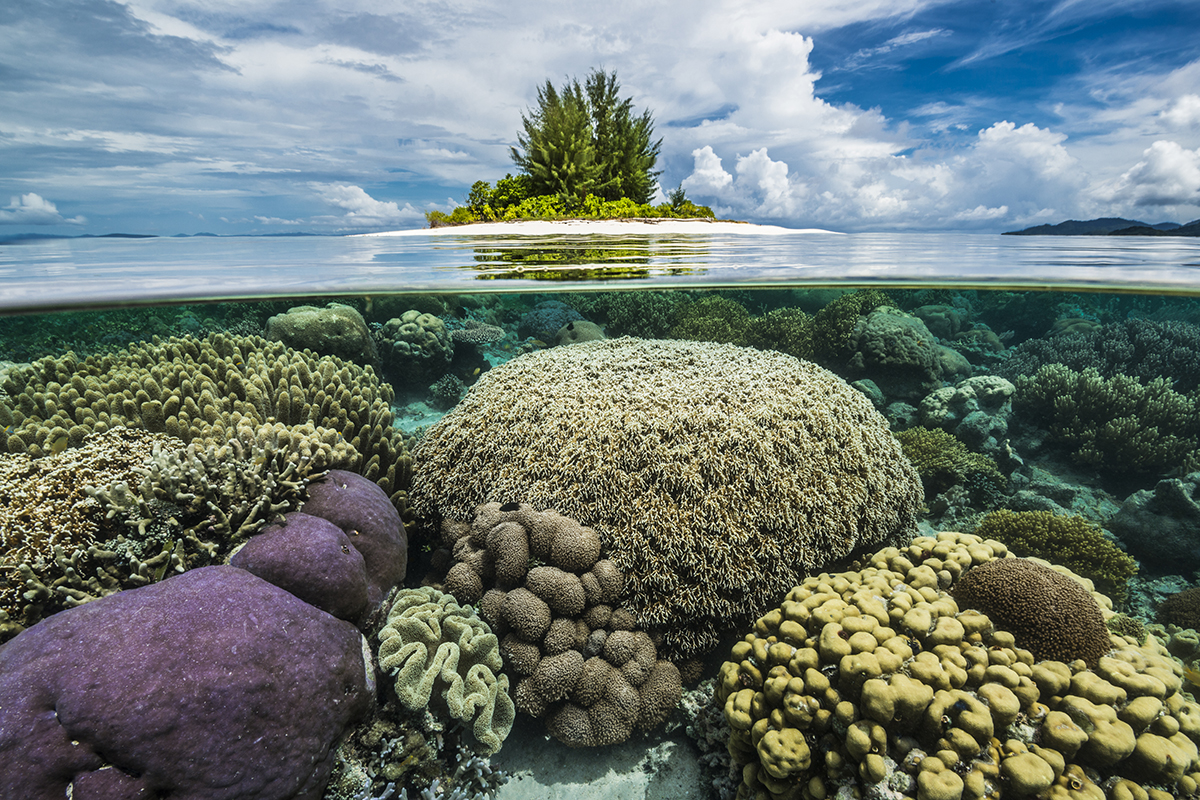
The Coral Triangle is a roughly triangular area of 5.7 million square kilometres spread across oceanic parts of Indonesia, Malaysia, the Philippines, Papua New Guinea, the Solomon Islands, and Timor Leste. What makes it so special is that it makes up only 1.6% of the Earth’s ocean, but is home to 76% of all known coral species in the world, 52% of Indo-Pacific reef fishes, and 37% of the world’s reef fishes. This makes it the most biodiverse region on earth when it comes to marine species.
Since Alfred Russell Wallace’s exploration of the area in the 19th century, marine scientists have been trying to figure out exactly why the seas are so rich and resilient here. Their research is key to understanding how to better protect marine life everywhere else in the world.
North Sulawesi’s Place in the Coral Triangle
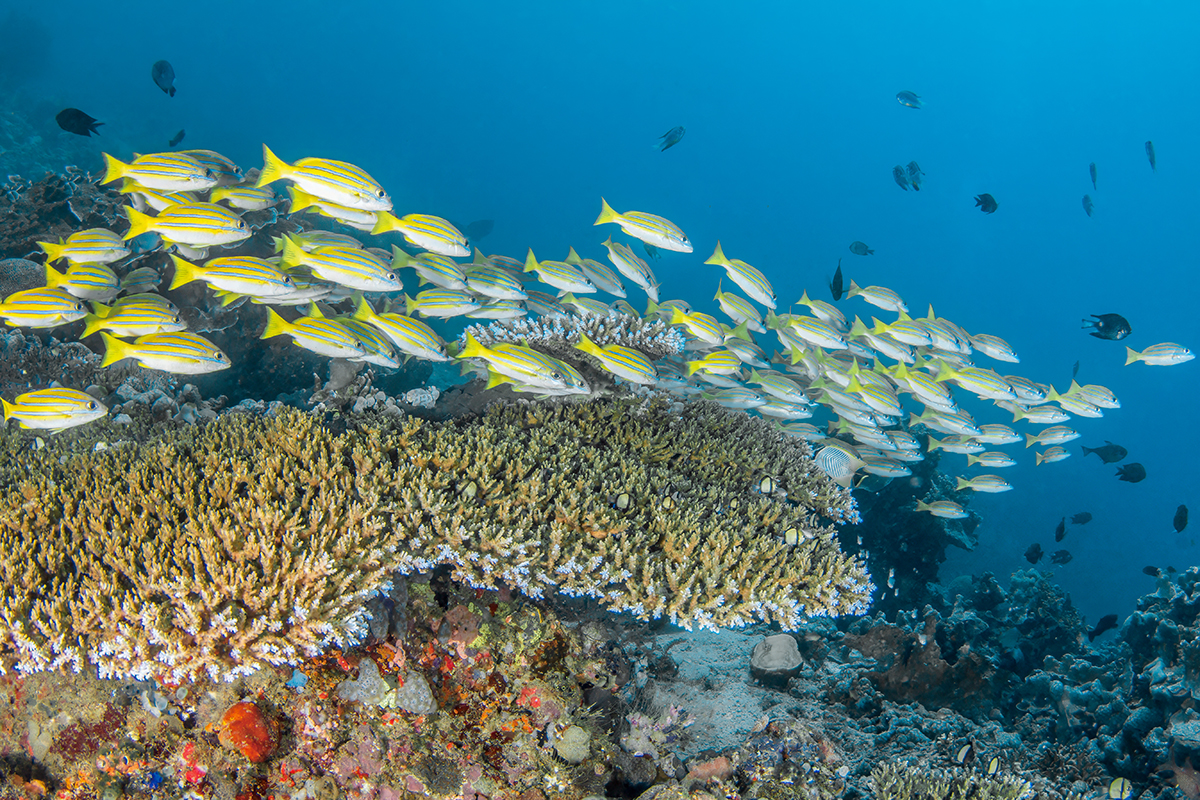
North Sulawesi is often called the Heart of the Coral Triangle. This is not only because it is centrally located, but also because it has played a pivotal role in the conservation of the region. In 1991 Bunaken National Marine Park was established, making it the first marine protected area (MPA) in Indonesia. Considering Indonesia is a country of around 17,000 islands, this was the prototype for every other MPA that was to come.
North Sulawesi is also incredibly interesting to marine scientists thanks to interesting topography and geographical peculiarities. The Celebes Basin, which was formed over millions of years, has created a thermal buffering effect that moderates temperature fluctuations. This in turn keeps diverse coral colonies safe from large-scale bleaching events.
You also see the effects of the Indonesian Throughflow (ITF) in North Sulawesi. This oceanographic phenomenon pushes massive amounts of water through the straits and passages between islands of the Indonesian archipelago. This continuous flow of cooler, nutrient-rich water not only supports marine life, but mitigates the rising sea temperatures and risks of coral bleaching.
Gangga Island, Bangka Island, and the Lembeh Strait are smack bang in the centre of all this incredible environmental magic that marine life thrives in.
Gangga Island as a Base for Marine Exploration

Gangga Island’s perfect position opens up a world of diving opportunities in North Sulawesi. You will have easy access to over 30 world-class dive sites across Bunaken, Bangka, and Lembeh Strait. From muck diving, pelagic encounters, coral gardens, and night dives, you won’t believe the quality of diving on your doorstep. Visibility is generally very high and there are no crowds like you might find in places like Bali or Komodo National Park.
Gangga Divers is Gangga Island Resort & Spa’s professional 5* PADI Dive Centre, where professional guides will show you some of the most magnificent reefs in the world. Gangga Divers has 3 boats specifically built for diving and offers trips most days according to demand and weather conditions. You will also have access to all dive centre amenities including a camara room, learning centre, and gear
rental.
What You Might See
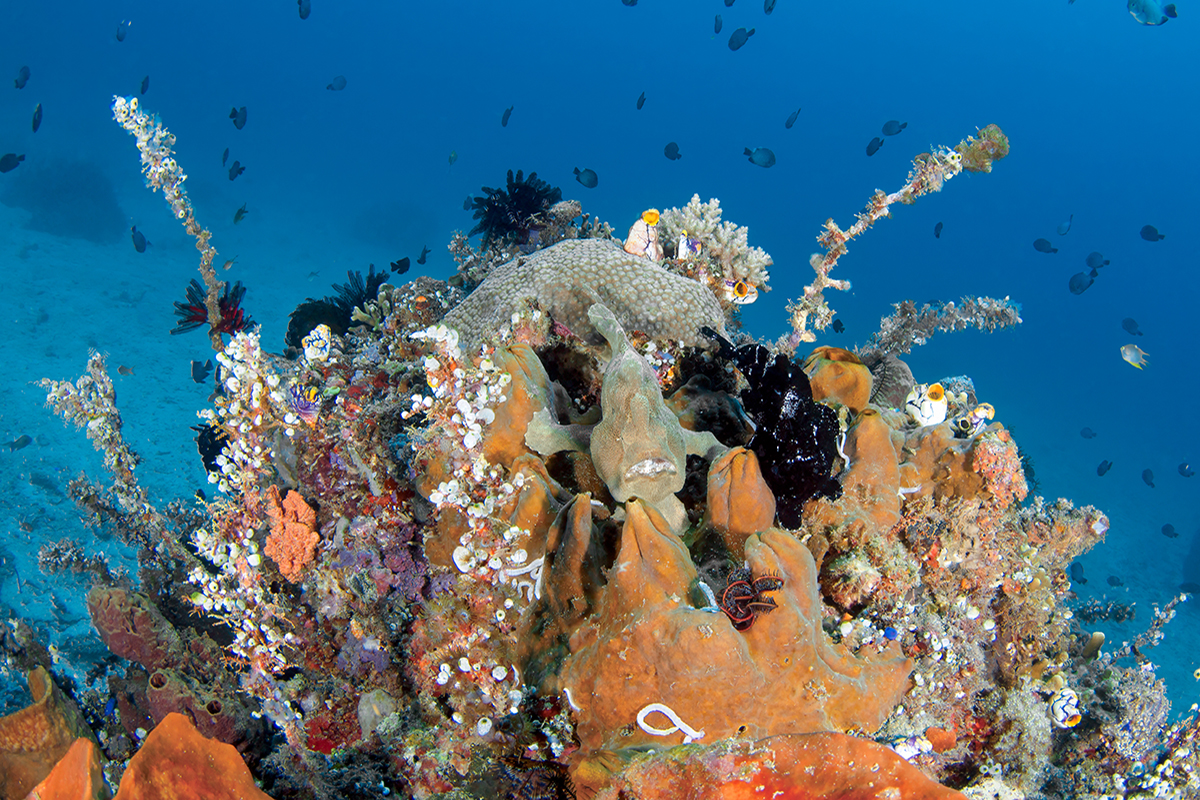
You can expect a wide range of species in the waters of North Sulawesi. Beautiful corals and reef fish of every shape, size, and colour are a given, but pygmy seahorses, ghost pipefish, and frogfish are some that you will have to look a bit harder for.
As for the larger species, white and black tipped reef sharks are common in the region as well as a number of sea turtle species, Napoleon wrasse, and eagle rays. If you are really lucky you might spot a passing sperm whale or in very rare cases, an orca or whale shark.
Conservation Matters
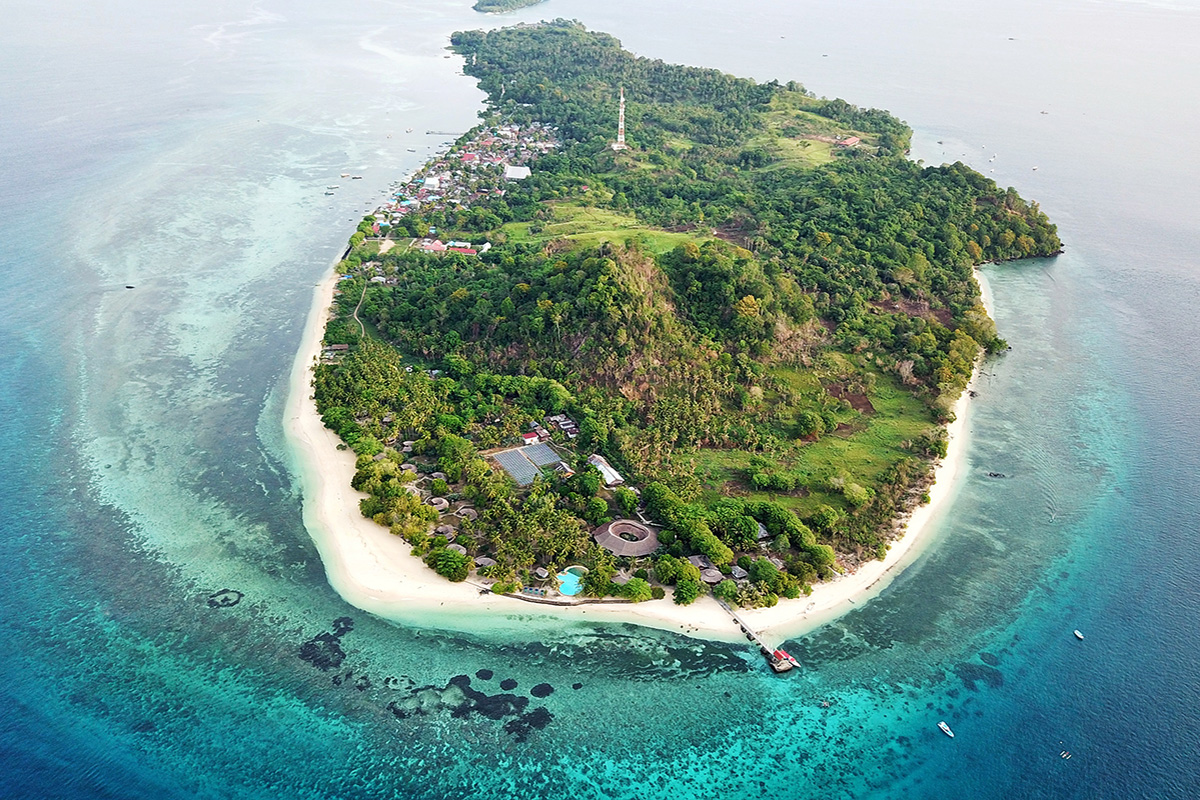
Marine conservation is a major issue in North Sulawesi. As leaders in the creation of MPA’s in Indonesia with Bunaken Marine Park, it has proven that there can be positive effects from tourism when managed properly. The fees collected from visiting tourists help to pay for the management of the park, which in turn, safeguards marine life.
It is also important for tourist businesses to play their role in the conservation efforts. For example, Gangga Island Resort & Spa operates to strict eco-friendly guidelines to ensure diving is done sustainably, and there is as little effect on the environment as possible. Solar energy, as close to zero waste policies, and the use of environmentally friendly cleaning products are just a few ways the resort assists in the conservation of North Sulawesi biodiversity.
Come and Witness North Sulawesi for Yourself
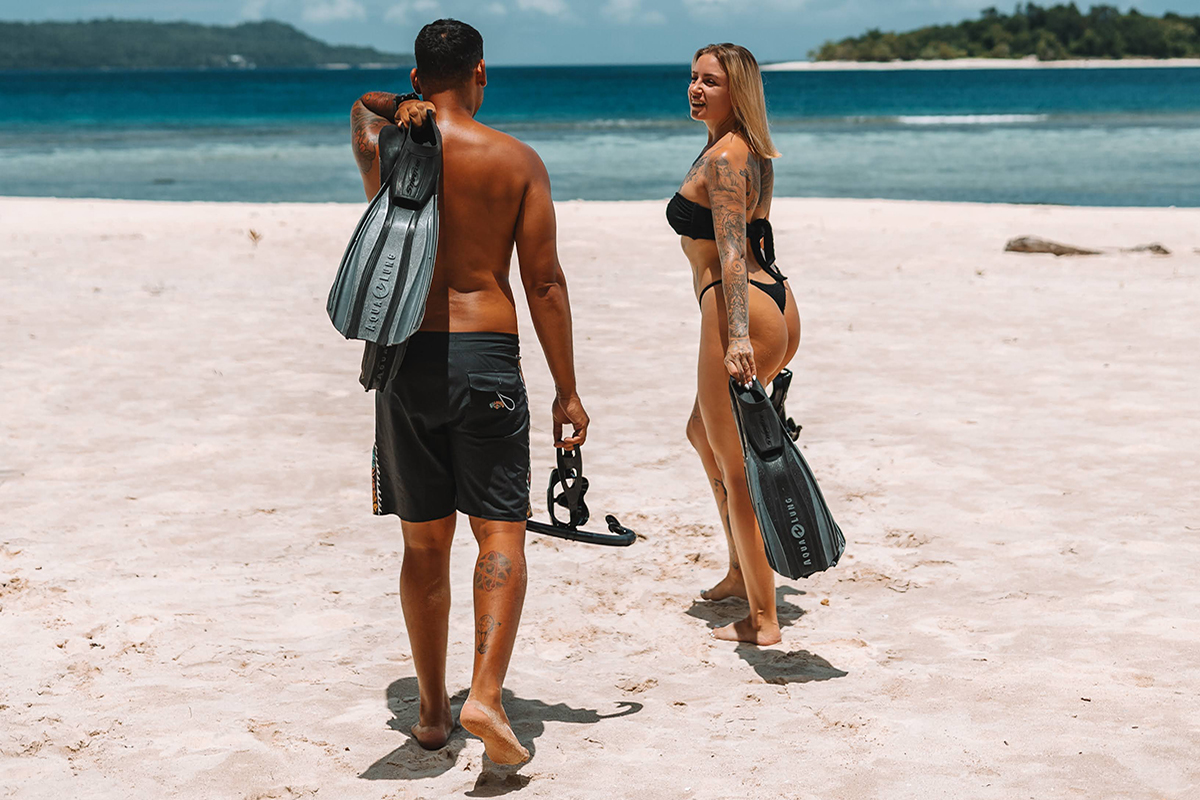
You can read this article and maybe get a feel for North Sulawesi’s appeal, but you really do need to see it for yourself to really discover its magic. Apart from the incredible diving, with breathtaking marine biodiversity, you will also experience the total relaxation of island life. A bungalow on the beach where you can watch the gentle waves rolling onto the powder-soft sand, and night skies bursting with stars are ready to welcome you.
Don’t hesitate, come and see firsthand what North Sulawesi, the Heart of the Coral Triangle, has in store for you.
Contact us with any questions or queries about getting to, or staying at Gangga Island Resort & Spa.

 Loading...